Positions through iterating
Statement
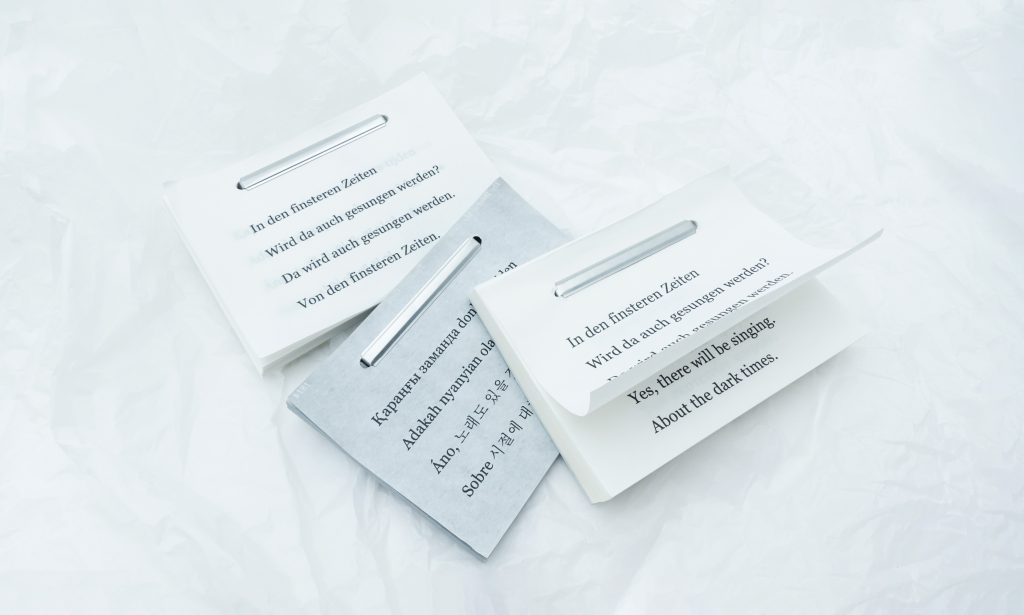
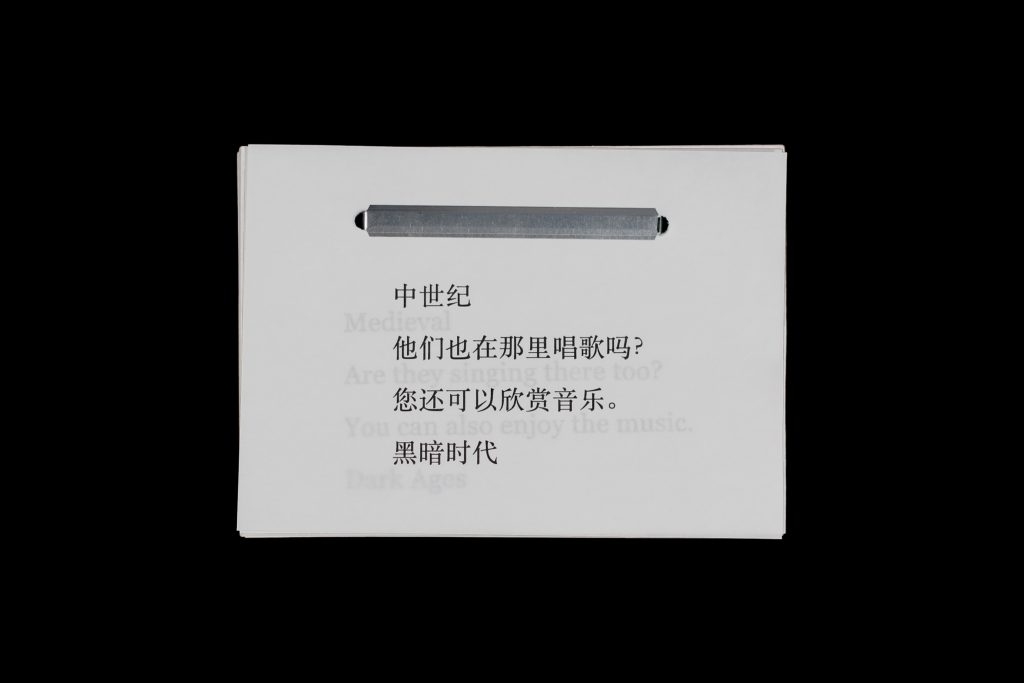
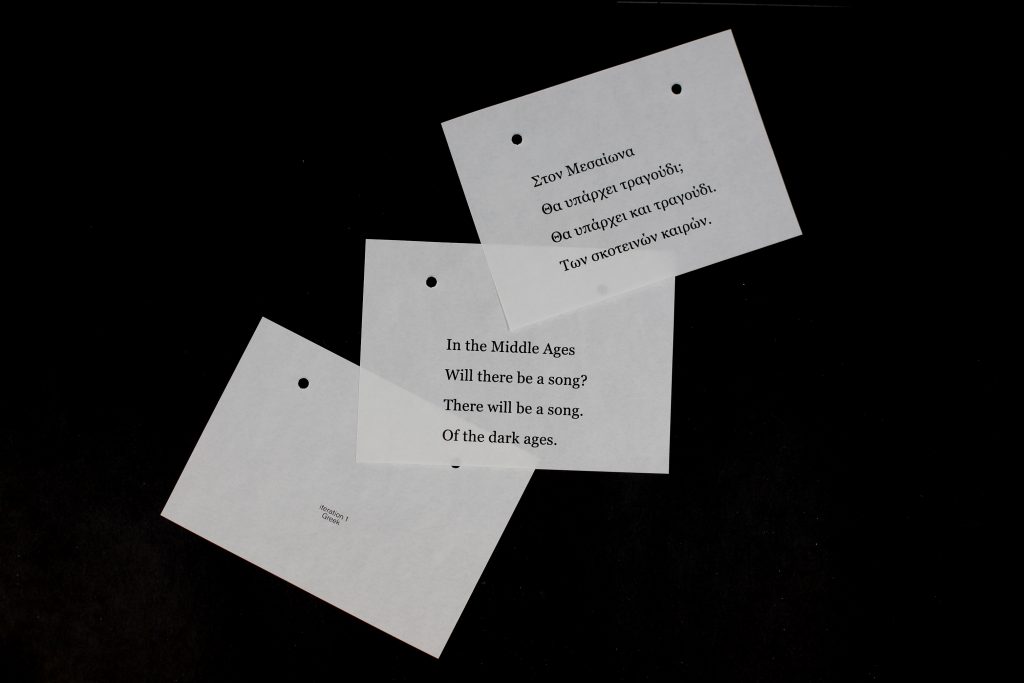
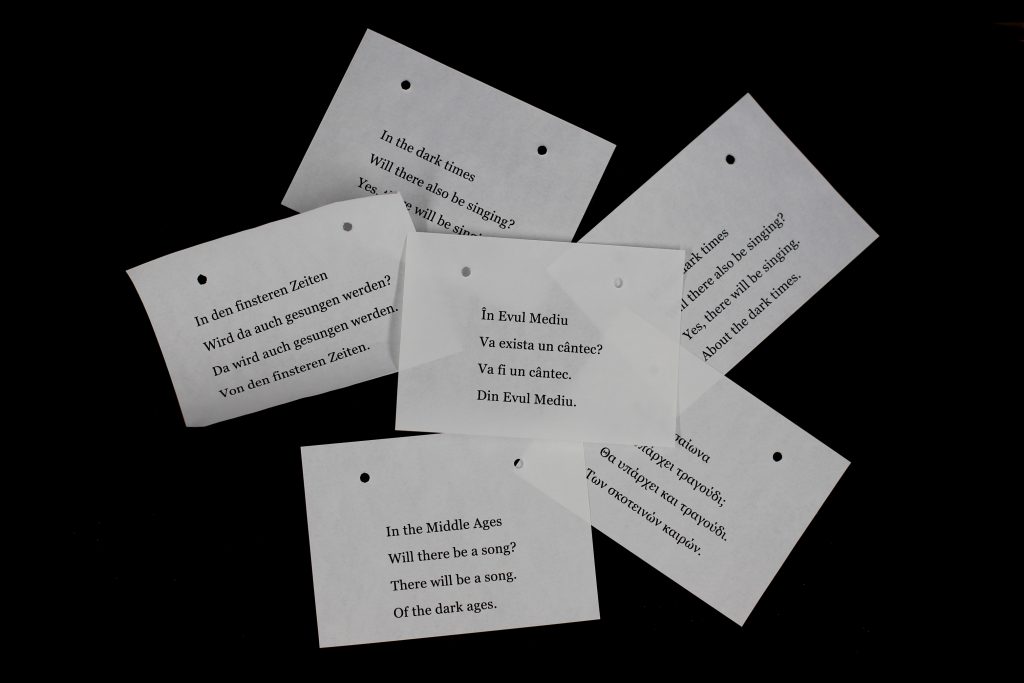
This project explores what is lost when translation is removed from human cultural judgment and processed by algorithms. To explore this question, I developed two translation systems around Brecht’s poem. One uses automated translation to generate repeated iterations across multiple languages until the text begins to fragment and collapse. The other invites people from different cultural backgrounds to translate the same poem and share the works, sounds, and images it brings to mind. These two trajectories do not simply compare machine and human translation. Instead, they expose translation as a process of negotiation shaped by technical systems and lived experience. The project suggests that instability is not a failure of translation, but one of its fundamental conditions, whether a human or a machine performs translation.
Bibliography
1. Exercises in Style
By studying Queneau’s (1998) Exercises in Style, I realised that translation is not limited to converting the literal meaning of words. The book made me think about how the same text can be retranslated through changes in tone, typography, and visual presentation. Queneau (1998) shows that a story can remain the same at its core while taking on very different forms. This influenced my approach to Brecht’s poem, where I began to see each version not only as a language shift but also as a change in voice and appearance. In my project, I translated the poem across multiple languages through repeated iterations, and I also experimented with how different fonts and layouts can affect interpretation. This suggests that translation is not just about meaning, but also about how a text is performed and experienced.
2. In Defense of the Poor Image
Steyerl’s (2012) defence of the “poor image” made me think about whether translation itself can also be understood as a democratic act. In her argument, images become “poorer” as they are copied, circulated, and shared across wider audiences. This idea led me to reflect on translation in a similar way. When a text is translated repeatedly, meaning does not remain fixed; instead, it begins to shift, weaken, and sometimes disappear. This does not simply show failure. It also raises a more critical question: what does it mean when meaning becomes less stable in order to travel more widely? In my project, I use repeated translation to explore this tension between accessibility and loss. The work suggests that translation may open language to more people, but it also changes what the text can hold. In this sense, the loss of meaning is not only a technical issue, but also a political and cultural one.
3. Mouse or Rat? Translation as Negotiation
Umberto Eco’s (2003) Mouse or Rat? Translation as Negotiation frames translation as a process of negotiation rather than direct equivalence. Eco (2003) argues that translation is not simply about replacing words between languages, but about making choices shaped by cultural context, intention, and interpretation. This perspective helps me move beyond a purely linguistic understanding of translation and consider it as a form of cultural exchange.
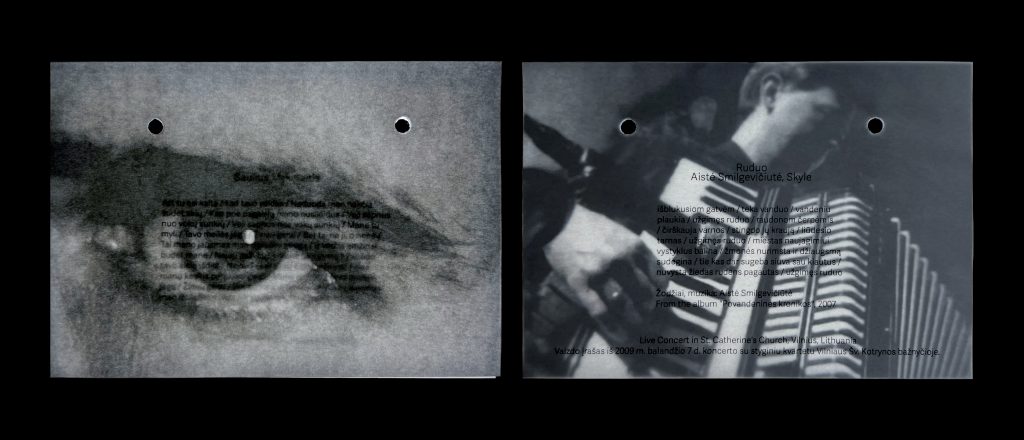
In my project, I invite people from different cultural backgrounds to translate the same poem and reflect on their understanding of it. Instead of aiming for accuracy, I am interested in how each person interprets tone, emotion, and meaning. I also ask them to share related works — such as music, films, paintings, or speeches — that connect to the idea of “singing in the dark.” These responses extend the poem beyond its original form and show how meaning continues to evolve across contexts. Eco’s (2003) concept of negotiation helps me frame these translations not as fixed results, but as ongoing processes shaped by personal and cultural experience.
4. The Rustle of Language
Roland Barthes’ (1986) The Rustle of Language helps me rethink translation as a process of producing meaning rather than transferring it. His idea of the “Text” (1986) as an open and unstable field suggests that meaning is not fixed, but continuously generated through reading. This perspective shifts my project away from treating Brecht’s poem as a stable original. Instead, each translation becomes an act of rewriting, where new meanings are produced rather than preserved.
Barthes’ concept of the “death of the author” (1986) challenges the idea that meaning should remain faithful to Brecht’s original intention. In my project, human translators can be understood as “writers” rather than neutral translators, since they actively shape the text through their interpretation. This raises a further question about machine translation. If human translation is a form of creation, can automated translation also be considered productive? The iterative process, including moments of breakdown and unreadable text, can be seen not only as failure but as a different form of language emerging from computational systems.
5. The Translator’s Task
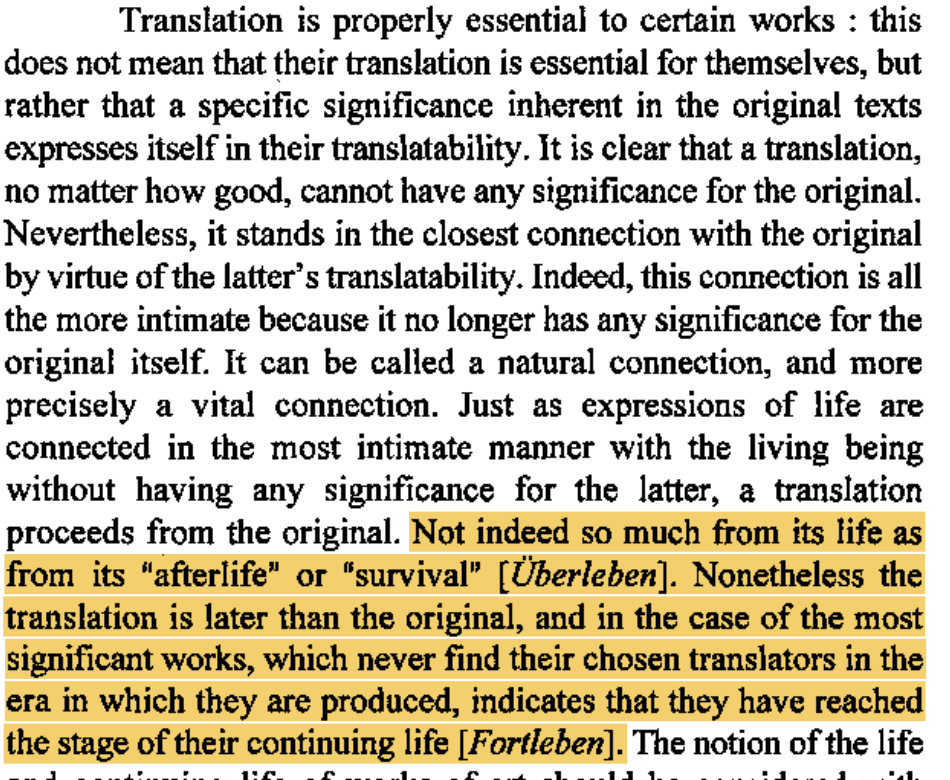
Walter Benjamin’s concept of translation as the “afterlife” of a work (1997, p. 153) offers an important framework for my project. He suggests that translation is not secondary to the original, but a continuation of its life across time and language. This idea leads me to reconsider what the “afterlife” of a text might look like in a contemporary context. In my practice, the repeated iterations generated through automated systems, as well as human translations, can be understood as new forms of this afterlife. Rather than preserving a fixed meaning, the poem evolves through different linguistic and technological conditions, raising the question of whether its survival is now shaped by computational processes.
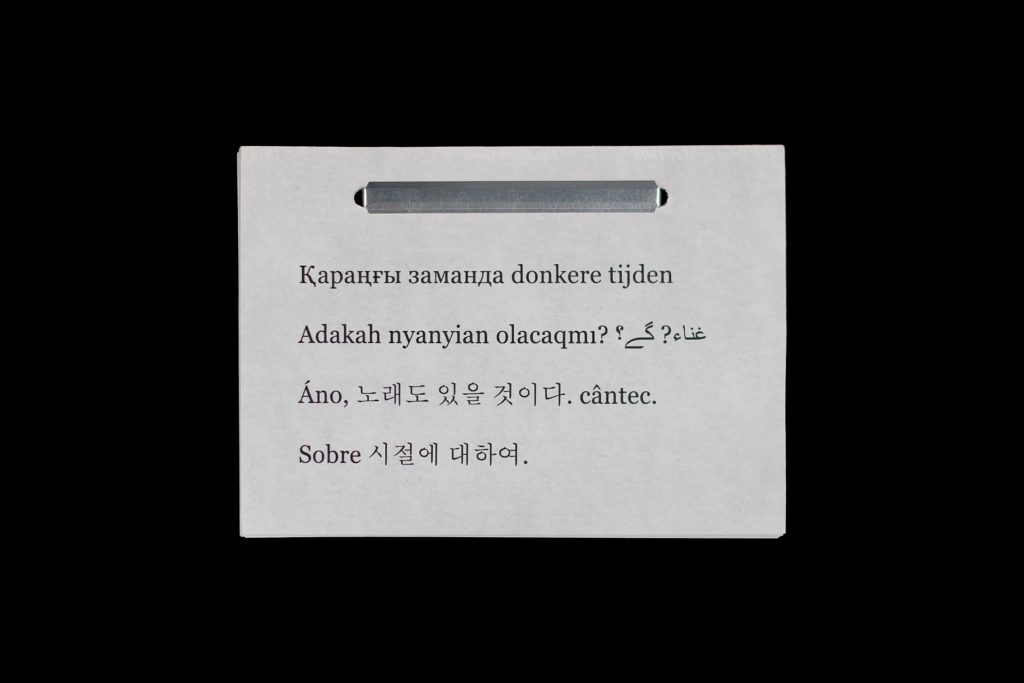
Benjamin’s idea of “pure language” also informs my early experiments with multilingual composition. He describes individual languages as fragments that do not fully express meaning on their own, but can relate to each other through translation. In my first publication, where multiple languages are combined into a single text, I explore whether these fragments can interact and produce new forms of meaning. Instead of aiming for clarity, this approach tests whether meaning can emerge through juxtaposition, tension, and partial understanding.
6. Book from the Ground
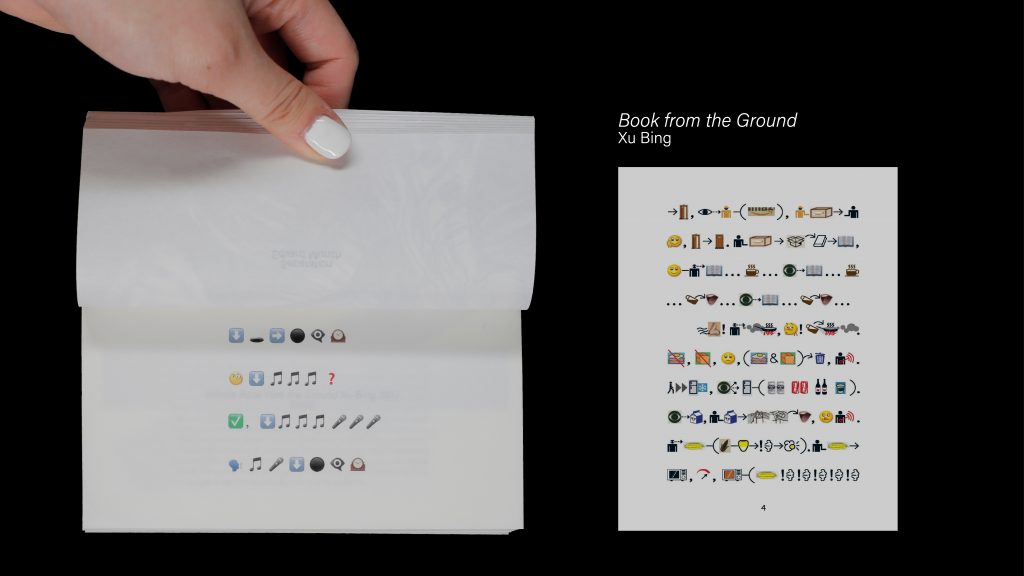
Xu Bing’s (2014) Book from the Ground inspires me to rethink translation beyond alphabetic language. By constructing an entire book using universally recognisable symbols, such as icons and emojis, Xu (2014) proposes a system that aims to be readable across linguistic boundaries. This approach encourages me to experiment with translating Brecht’s poem using emoji and forms of contemporary digital language. In my project, this shift questions whether meaning can be maintained when words are replaced by visual signs. While emojis may appear universal, their interpretation is often shaped by cultural context and personal experience.
Through this practice, I begin to consider whether there are alternative ways to communicate meaning across languages, such as through images, symbols, or even music. These forms may create immediate emotional resonance and seem more accessible than written language. However, they also introduce new forms of ambiguity. A single emoji or image can carry multiple interpretations, depending on the viewer’s background and context. This suggests that even non-verbal systems cannot fully escape misunderstanding. Instead of solving the problem of translation, they shift it into a different form, where meaning remains open, unstable, and negotiated.


References
Barthes, R. (1986) The Rustle of Language, translated by R. Howard. New York: Hill and Wang.
Benjamin, W. (1997) ‘The translator’s task’, translated by S. Rendall. TTR: traduction, terminologie, rédaction, 10(2), pp. 151–165.
Eco, U. (2003) Mouse or Rat? Translation as Negotiation. London: Weidenfeld & Nicolson.
Queneau, R. (1998) Exercises in Style, translated by B. Wright. New York: New Directions.
Steyerl, H. (2012) ‘In Defense of the Poor Image’, in The Wretched of the Screen. Berlin: Sternberg Press, pp. 31–45.
Xu Bing (2014) Book from the Ground: From Point to Point. Cambridge, MA: MIT Press.