Positions through dialogue
written component
Positions through contextualising
studio practice
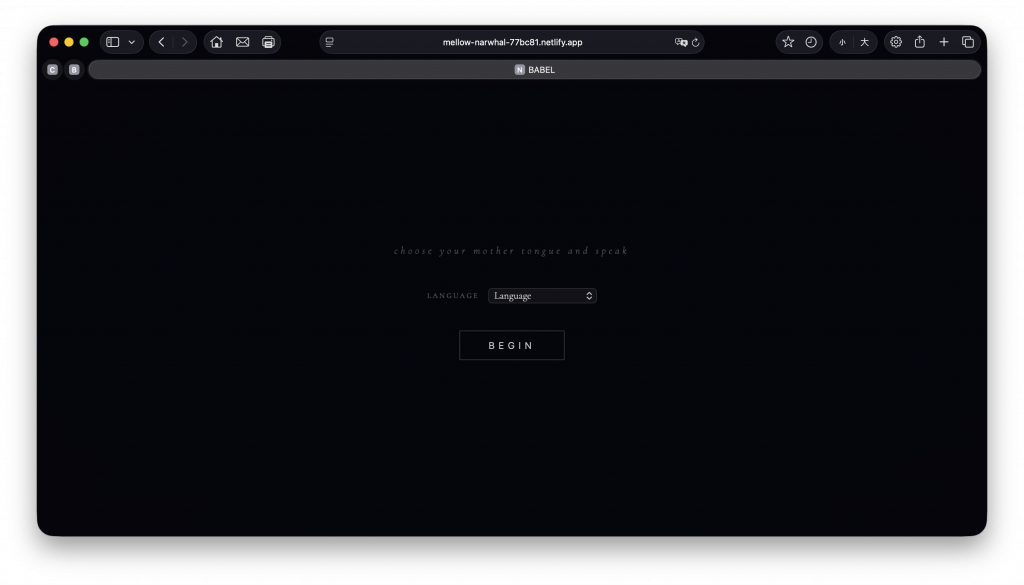
Talk to the web

https://mellow-narwhal-77bc81.netlify.app/
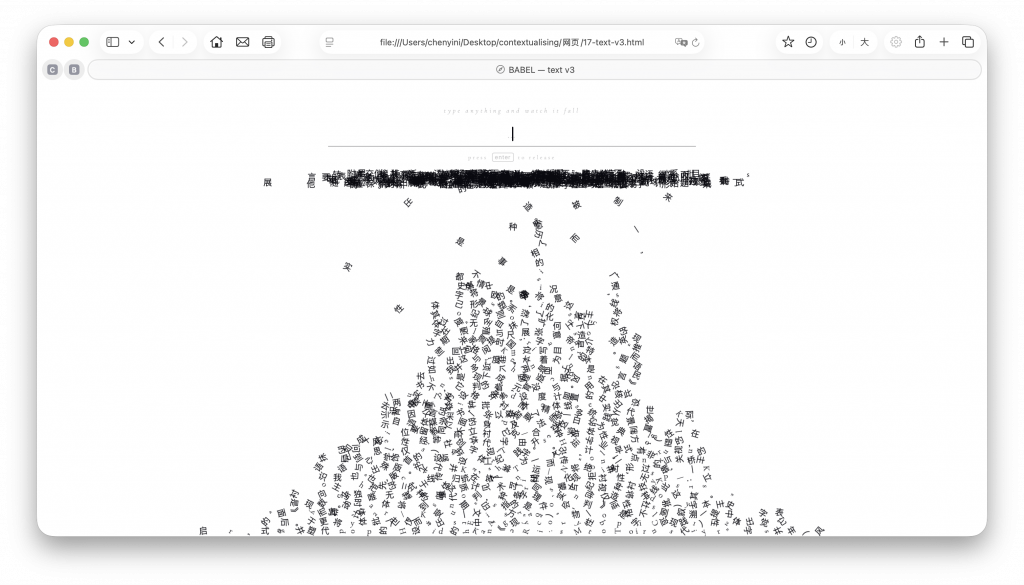
Type on the web
⌨️
https://6a1d13b6ef132db1a811c038–resonant-lebkuchen-45b1df.netlify.app
Methods of contextualising
Statement
Focusing on the Student Hometown Travel dataset of NZSIP, our group’s exploration evolved into a critical interrogation of the graphic designer’s positionality. Although these emissions are generated by student movement, students should not be the targets of environmental blame since the mobility is embedded within the structures of a globalised education system.
The final work of our group is the Authorised Movement Pack. It is an archival publication that reframes student hometown travel as a procedural output of institutional systems. Through various official documents and sediment imagery, it reveals how emissions are produced, recorded, and assigned to individuals within structures of authorised mobility. Meanwhile, we adopted the visual language of geology to translate travel emissions into sedimentary formations to show how human mobility leaves permanent damage on the environment.
Throughout the design process, I repeatedly questioned whether we might unintentionally reinforce a narrative of individual responsibility. Do we have the authority to guide or regulate people’s lifestyles through visual language? Does visual communication risk reiterating and upholding institutional logics? Within the UAL Net Zero strategy practice, I gradually realise that the role of the graphic designer is not only to visualize data but also to reveal the
Bibliography
1. On Unpublishing: Fugitive Materiality and the Future of the Anthropocene Book by Gilbert, Annette, 1975-, Bajohr, Hannes, (2016)
Gilbert and Bajohr’s discussion of the Anthropocene gives important theoretical support to our project. They explain that printed materials are not only tools for sharing information, but also physical objects that exist in geological time. This idea changed how we think about publishing. We began to see publishing as an environmental act, not just a communication method. Books and printed matter become part of the material history of the planet. This thinking influenced our decision to present our project as a publication system. Our idea of using a scanned “geological barcode” comes from this perspective. The barcode symbolises how carbon emissions are stored and recorded on Earth, like sediment layers. Instead of seeing print as neutral documentation, we treat it as an active medium. It records and leaves marks. In this way, printing becomes a part of the environmental process and reflects how human mobility leaves long-term traces on the planet.
2. Paper knowledge: Toward a media history of documents by Lisa Gitelman
Gitelman studies documents and explains how they function as tools of authority. She argues that documents not only record reality, but also shape it. This idea is important for our Authorised Movement Pack. It helped us understand that paper objects such as tickets, receipts, and official forms have power. They create rules, assign roles, and define responsibility. In our project, items like boarding passes, luggage tags, and tax-free receipts are not simple travel objects. They show how institutions organise and control movement. These documents make mobility appear normal and necessary within globalised education. By using this official document style, we aim to reveal how systems manage and justify carbon emissions. Gitelman’s work helped us see that the “official” look of paper is not neutral. It carries authority and influences how people understand responsibility.
3. Graphesis: visual forms of knowledge production by Drucker, Johanna
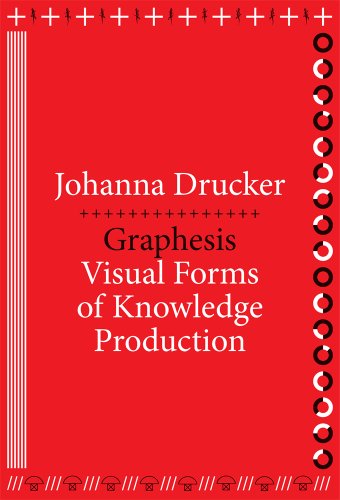
Johanna Drucker argues that visual forms do not simply show knowledge, but actively produce it. In Graphesis, she explains that diagrams, charts, and data visualisations are not neutral tools. They shape how we understand information. This idea helps us when we are working with carbon data and movement records. We start to think about how to make this data more accessible to the public. Instead of presenting emissions as objective facts, we question how visual forms influence the meaning of responsibility.
Drucker also suggests that visual systems can reflect power structures. This helped us rethink how travel documents and barcodes operate in our work. The ticket and the geological sediment visuals in our project are not only design elements. They are visual systems that organise and control how movement is understood. By combining travel aesthetics with geological imagery, we show that data about carbon emissions is constructed and framed. Drucker’s theory supports our decision to treat visual language as a critical tool, not just a method of communication.
4. Uncorporate Identity: Metahaven by Kruk, Vinca; and van der Velden, Daniel
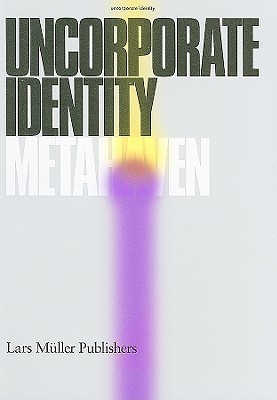
In Uncorporate Identity, Metahaven explores how visual identity can challenge political and institutional systems. Instead of creating branding that supports power, they use design to question authority and global structures. Their work shows that graphic design can be critical and political. This approach strongly connects to our project.
Our Authorised Mobility Pack also uses official visual language, such as tickets, barcodes, and receipts. However, like Metahaven, we do not use these forms to support institutions. We use them to expose how systems organise and normalise mobility. Metahaven’s work helped us understand that design can operate between critique and commentary. It does not need to give clear solutions. Instead, it can reveal hidden structures.
Their experimental publishing style also influenced our decision to create a physical pack. The project becomes more than information. It becomes a critical object. From Metahaven, we learned that visual language can question power while still using the same formal tools that institutions use.
Metahaven and Vishmidt, M. (eds.) (2010) Uncorporate identity. Baden: Lars Müller Publishers.
5. Heat by David Loy
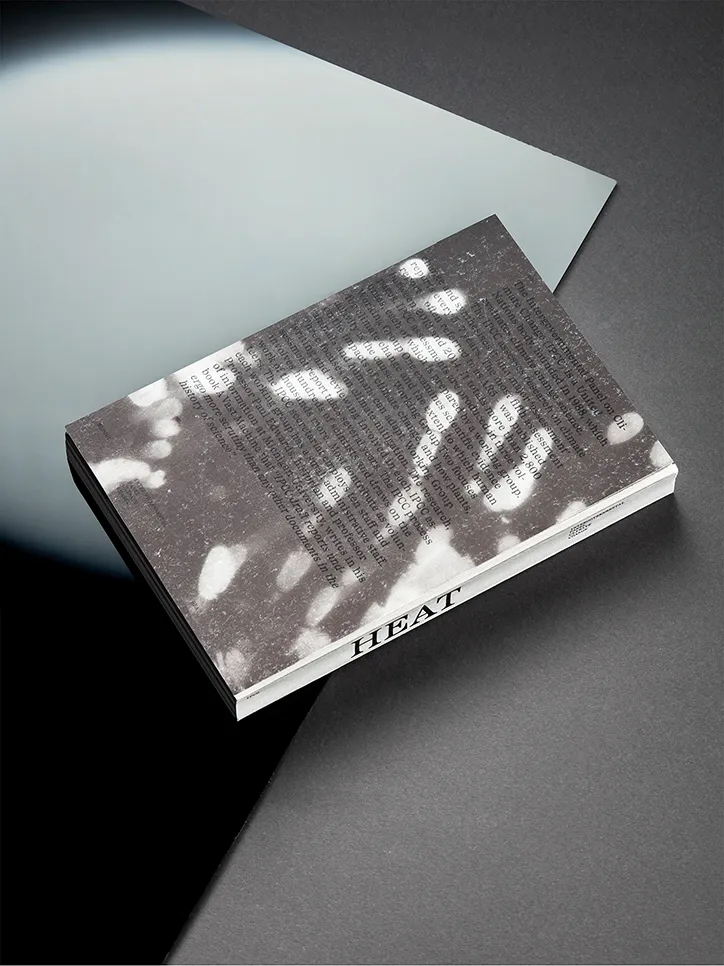
The book Heat by David Loy uses thermochromic ink on its cover. When a reader touches the surface, the heat from their hand leaves a visible handprint. This interactive element made us think about how design can create a structure that helps readers understand complex issues more easily. It shows that climate change is not distant. The reader becomes physically connected to the book, which makes the topic more personal and direct.
The book also combines two types of media. The first part presents written report content. The second part includes images from the National Geographic Archives. By bringing together text and historical imagery, the book creates a layered reading experience. This structure influenced our project. In our Authorised Mobility Pack, we also combine different visual systems, such as official travel documents and geological sediment imagery. Similar to Heat, we use material and visual contrast to communicate complexity. The geological visuals in our project help connect human mobility to long-term environmental change. From this reference, we learned that form and material can support critical content and make abstract climate issues more accessible.
6. Forensic Architecture
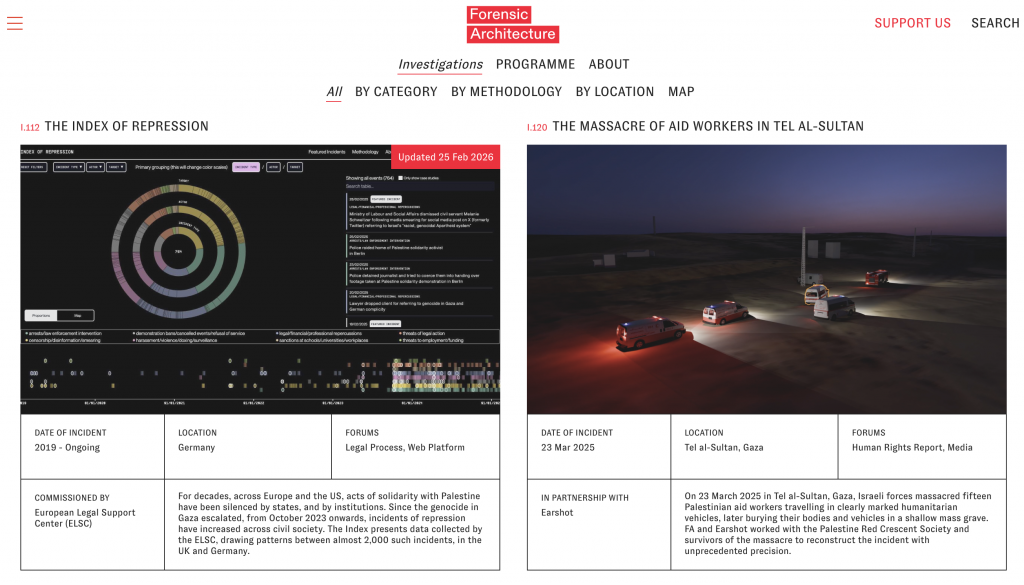
Forensic Architecture is a research agency that uses visual tools to investigate political and environmental issues. They combine maps, spatial models, videos and data to reconstruct events. Their work shows that visual evidence can reveal hidden systems of power. Instead of creating traditional graphic design, they use design as a method of investigation.
This approach connects closely to our project. In our Authorised Mobility Pack, we also use visual systems such as tickets, barcodes and geographical graphics to reveal how institutions organise mobility. Like Forensic Architecture, we are not only presenting information. We are questioning how systems record and manage human movement. Their work helped us understand that data and visual evidence are not neutral. They can be arranged to expose structural responsibility.
We were especially inspired by their way of turning complex systems into clear visual narratives. In our project, carbon emissions and travel data become part of a material archive. This method allows us to show that mobility is not just personal behaviour, but part of a larger institutional structure.
Reference:
Drucker, J. (2014) Graphesis: Visual forms of knowledge production. Cambridge, MA: Harvard University Press.
Forensic Architecture (no date) Forensic Architecture. Available at: https://forensic-architecture.org/ (Accessed: 2 March 2026).
Gilbert, A. and Bajohr, H. (2016) ‘On unpublishing: Fugitive materiality and the future of the Anthropocene book’, in Gilbert, A. and Bajohr, H. (eds.) Publishing as artistic practice. Berlin: Sternberg Press, pp. 282–294.
Gitelman, L. (2014) Paper knowledge: Toward a media history of documents. Durham, NC: Duke University Press.
Loy, D. (2019) Heat. [Place of publication not specified]: [Publisher not specified].
Metahaven and Vishmidt, M. (eds.) (2010) Uncorporate identity. Baden: Lars Müller Publishers.
Methods of contextualising
Statement
Focusing on the Student Hometown Travel dataset of NZSIP, our group’s exploration evolved into a critical interrogation of the graphic designer’s positionality. Although these emissions are generated by student movement, students should not be the targets of environmental blame since the mobility is embedded within the structures of a globalised education system.
The final work of our group is the Authorised Movement Pack. It is an archival publication that reframes student hometown travel as a procedural output of institutional systems. Through various official documents and sediment imagery, it reveals how emissions are produced, recorded, and assigned to individuals within structures of authorised mobility. Meanwhile, we adopted the visual language of geology to translate travel emissions into sedimentary formations to show how human mobility leaves permanent damage on the environment.
Throughout the design process, I repeatedly questioned whether we might unintentionally reinforce a narrative of individual responsibility. Do we have the authority to guide or regulate people’s lifestyles through visual language? Does visual communication risk reiterating and upholding institutional logics? Within the UAL Net Zero strategy practice, I gradually realise that the role of the graphic designer is not only to visualize data but also to reveal the
Bibliography
1. On Unpublishing: Fugitive Materiality and the Future of the Anthropocene Book by Gilbert, Annette, 1975-, Bajohr, Hannes, (2016)
Gilbert and Bajohr’s discussion of the Anthropocene gives important theoretical support to our project. They explain that printed materials are not only tools for sharing information, but also physical objects that exist in geological time. This idea changed how we think about publishing. We began to see publishing as an environmental act, not just a communication method. Books and printed matter become part of the material history of the planet. This thinking influenced our decision to present our project as a publication system. Our idea of using a scanned “geological barcode” comes from this perspective. The barcode symbolises how carbon emissions are stored and recorded on Earth, like sediment layers. Instead of seeing print as neutral documentation, we treat it as an active medium. It records and leaves marks. In this way, printing becomes a part of the environmental process and reflects how human mobility leaves long-term traces on the planet.
2. Paper knowledge: Toward a media history of documents by Lisa Gitelman
Gitelman studies documents and explains how they function as tools of authority. She argues that documents not only record reality, but also shape it. This idea is important for our Authorised Movement Pack. It helped us understand that paper objects such as tickets, receipts, and official forms have power. They create rules, assign roles, and define responsibility. In our project, items like boarding passes, luggage tags, and tax-free receipts are not simple travel objects. They show how institutions organise and control movement. These documents make mobility appear normal and necessary within globalised education. By using this official document style, we aim to reveal how systems manage and justify carbon emissions. Gitelman’s work helped us see that the “official” look of paper is not neutral. It carries authority and influences how people understand responsibility.
3. Graphesis: visual forms of knowledge production by Drucker, Johanna
Johanna Drucker argues that visual forms do not simply show knowledge, but actively produce it. In Graphesis, she explains that diagrams, charts, and data visualisations are not neutral tools. They shape how we understand information. This idea helps us when we are working with carbon data and movement records. We start to think about how to make this data more accessible to the public. Instead of presenting emissions as objective facts, we question how visual forms influence the meaning of responsibility.
Drucker also suggests that visual systems can reflect power structures. This helped us rethink how travel documents and barcodes operate in our work. The ticket and the geological sediment visuals in our project are not only design elements. They are visual systems that organise and control how movement is understood. By combining travel aesthetics with geological imagery, we show that data about carbon emissions is constructed and framed. Drucker’s theory supports our decision to treat visual language as a critical tool, not just a method of communication.
4. Uncorporate Identity: Metahaven by Kruk, Vinca; and van der Velden, Daniel
In Uncorporate Identity, Metahaven explores how visual identity can challenge political and institutional systems. Instead of creating branding that supports power, they use design to question authority and global structures. Their work shows that graphic design can be critical and political. This approach strongly connects to our project.
Our Authorised Mobility Pack also uses official visual language, such as tickets, barcodes, and receipts. However, like Metahaven, we do not use these forms to support institutions. We use them to expose how systems organise and normalise mobility. Metahaven’s work helped us understand that design can operate between critique and commentary. It does not need to give clear solutions. Instead, it can reveal hidden structures.
Their experimental publishing style also influenced our decision to create a physical pack. The project becomes more than information. It becomes a critical object. From Metahaven, we learned that visual language can question power while still using the same formal tools that institutions use.
Metahaven and Vishmidt, M. (eds.) (2010) Uncorporate identity. Baden: Lars Müller Publishers.
5. Heat by David Loy
The book Heat by David Loy uses thermochromic ink on its cover. When a reader touches the surface, the heat from their hand leaves a visible handprint. This interactive element made us think about how design can create a structure that helps readers understand complex issues more easily. It shows that climate change is not distant. The reader becomes physically connected to the book, which makes the topic more personal and direct.
The book also combines two types of media. The first part presents written report content. The second part includes images from the National Geographic Archives. By bringing together text and historical imagery, the book creates a layered reading experience. This structure influenced our project. In our Authorised Mobility Pack, we also combine different visual systems, such as official travel documents and geological sediment imagery. Similar to Heat, we use material and visual contrast to communicate complexity. The geological visuals in our project help connect human mobility to long-term environmental change. From this reference, we learned that form and material can support critical content and make abstract climate issues more accessible.
6. Forensic Architecture
Forensic Architecture is a research agency that uses visual tools to investigate political and environmental issues. They combine maps, spatial models, videos and data to reconstruct events. Their work shows that visual evidence can reveal hidden systems of power. Instead of creating traditional graphic design, they use design as a method of investigation.
This approach connects closely to our project. In our Authorised Mobility Pack, we also use visual systems such as tickets, barcodes and geographical graphics to reveal how institutions organise mobility. Like Forensic Architecture, we are not only presenting information. We are questioning how systems record and manage human movement. Their work helped us understand that data and visual evidence are not neutral. They can be arranged to expose structural responsibility.
We were especially inspired by their way of turning complex systems into clear visual narratives. In our project, carbon emissions and travel data become part of a material archive. This method allows us to show that mobility is not just personal behaviour, but part of a larger institutional structure.
Reference:
Drucker, J. (2014) Graphesis: Visual forms of knowledge production. Cambridge, MA: Harvard University Press.
Forensic Architecture (no date) Forensic Architecture. Available at: https://forensic-architecture.org/ (Accessed: 2 March 2026).
Gilbert, A. and Bajohr, H. (2016) ‘On unpublishing: Fugitive materiality and the future of the Anthropocene book’, in Gilbert, A. and Bajohr, H. (eds.) Publishing as artistic practice. Berlin: Sternberg Press, pp. 282–294.
Gitelman, L. (2014) Paper knowledge: Toward a media history of documents. Durham, NC: Duke University Press.
Loy, D. (2019) Heat. [Place of publication not specified]: [Publisher not specified].
Metahaven and Vishmidt, M. (eds.) (2010) Uncorporate identity. Baden: Lars Müller Publishers.
Methods of translating
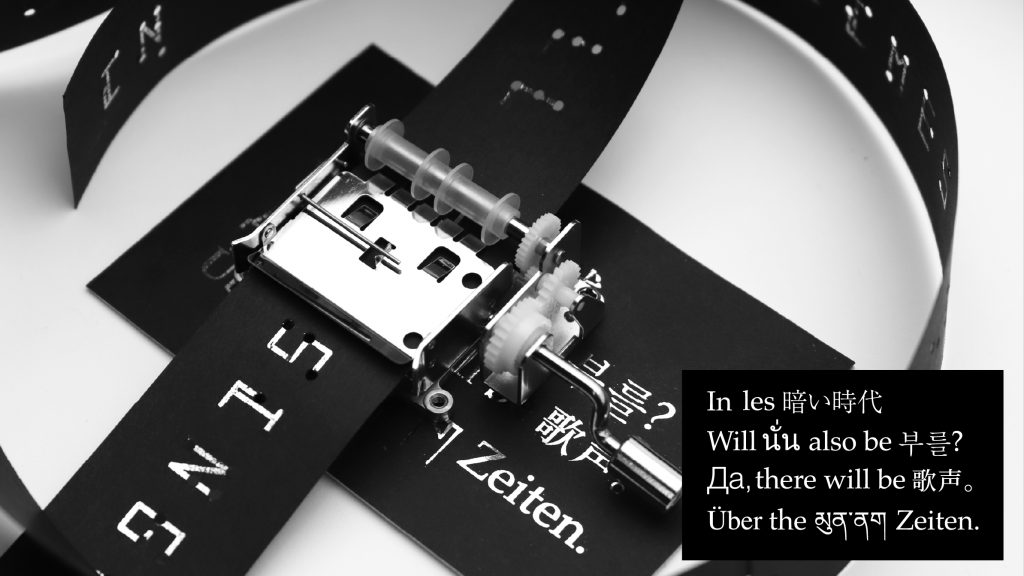
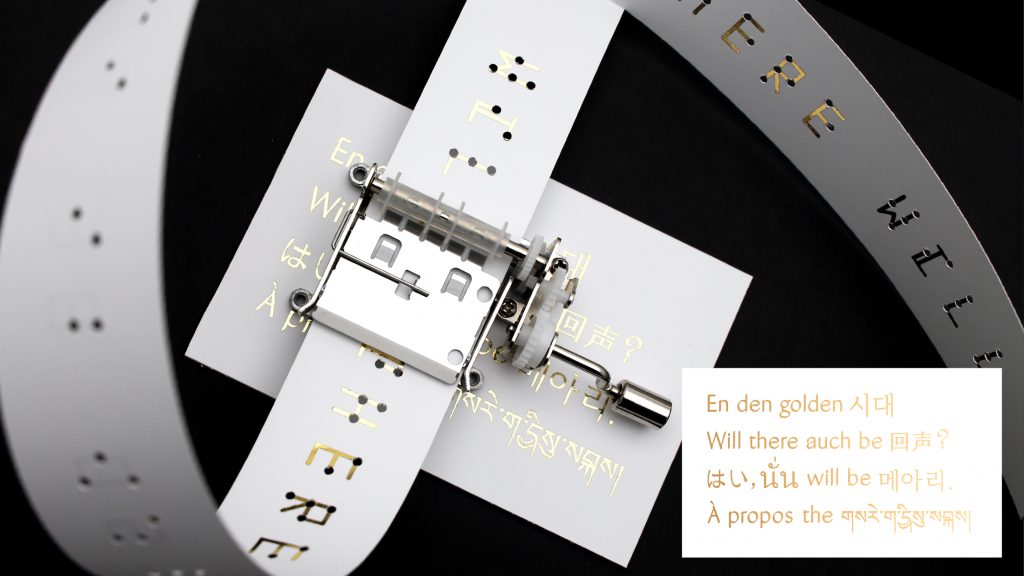
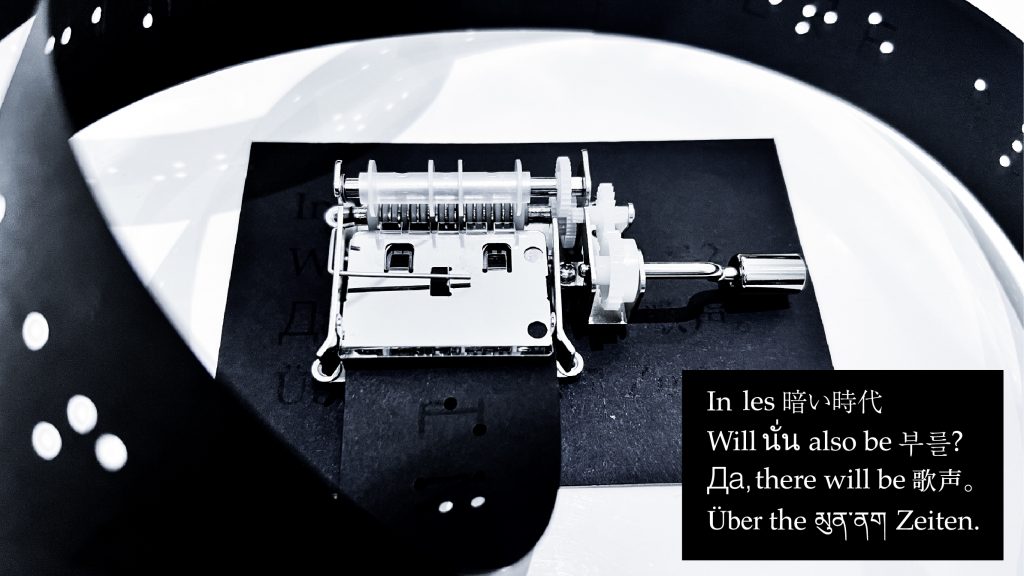
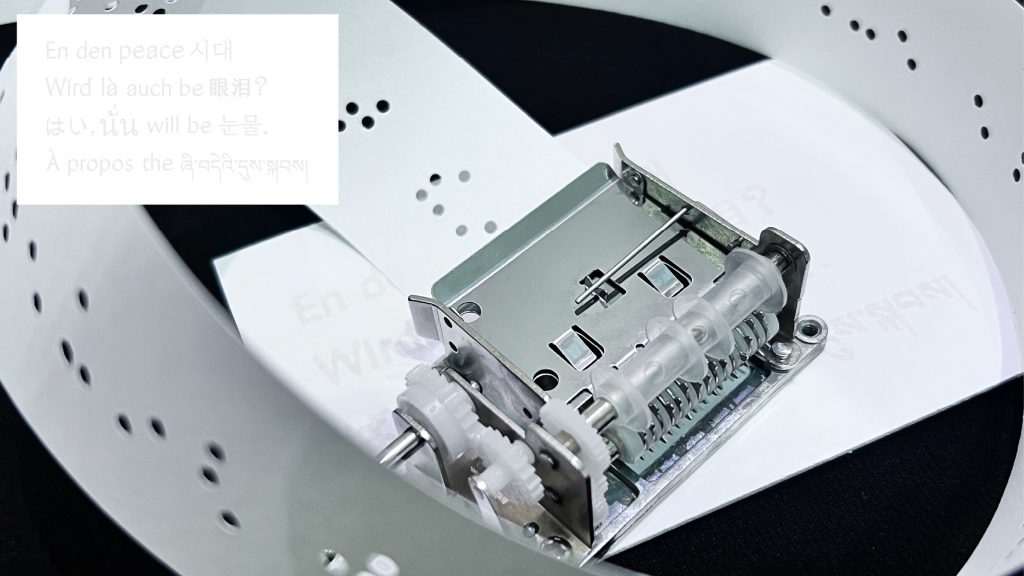
Singing translates Bertolt Brecht’s wartime motto into a trans-sensory, translingual installation. The poem is encoded as Braille, punched onto a music-box paper strip, and set to play when visitors turn the handle. Simultaneously, the music-box paper strip is printed with visible text that connects the Braille to keep readability. This poem is singing in the dark, heard, seen, and touched. At the same time, the poem was translated into multiple languages and embedded into the music box through a set of base cards, extending the work beyond a single linguistic system. Alongside the original text, I wrote two parallel poems using the same structure as comparative responses, placing translation, imitation, and authorship in dialogue.
The work explores how to transfer information when language fails. Presented as an intimate sensory object or an array of activated boxes, the work invites audiences to listen, touch, and share a collective, polyphonic memory.
Methods of iterating
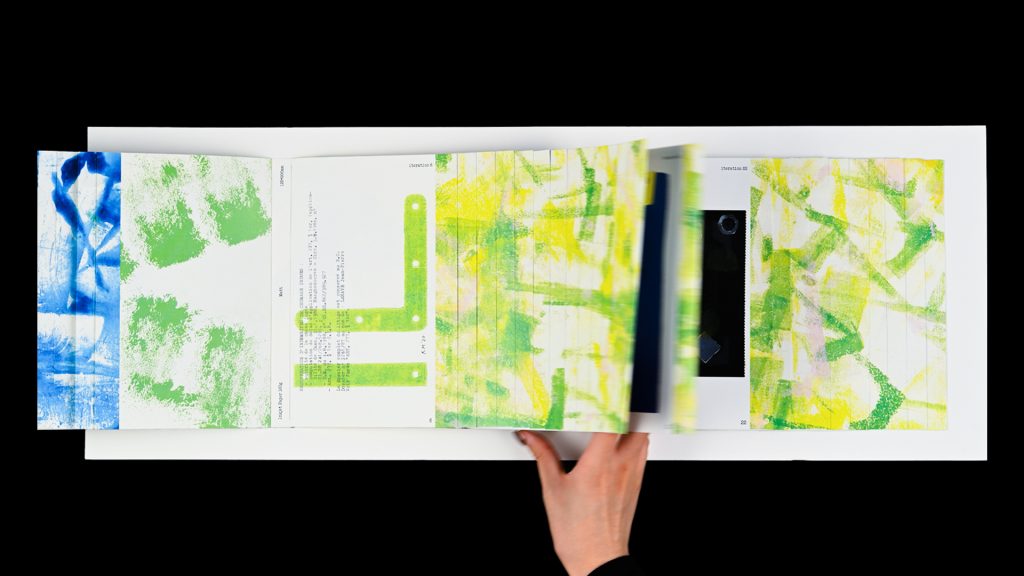
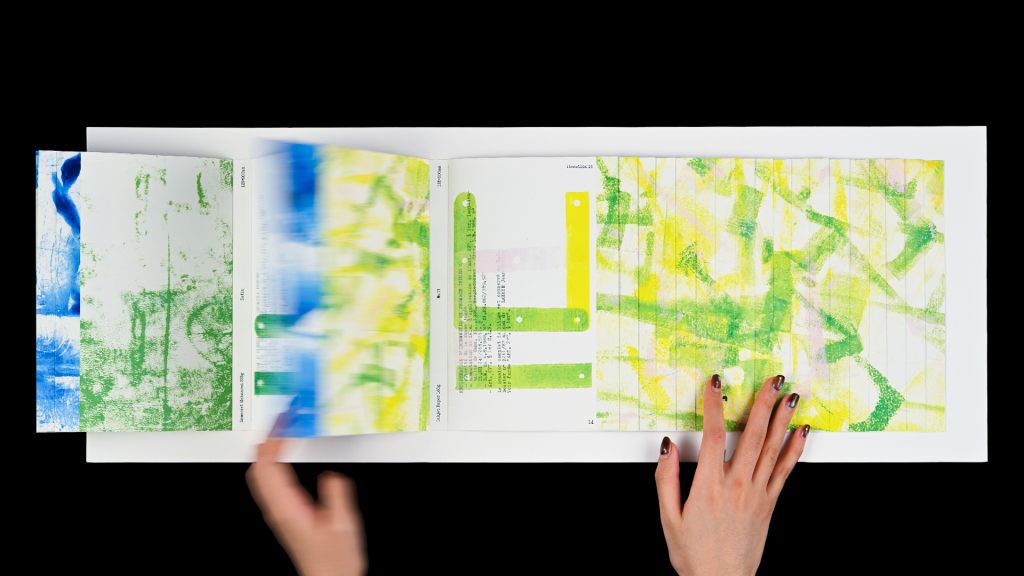
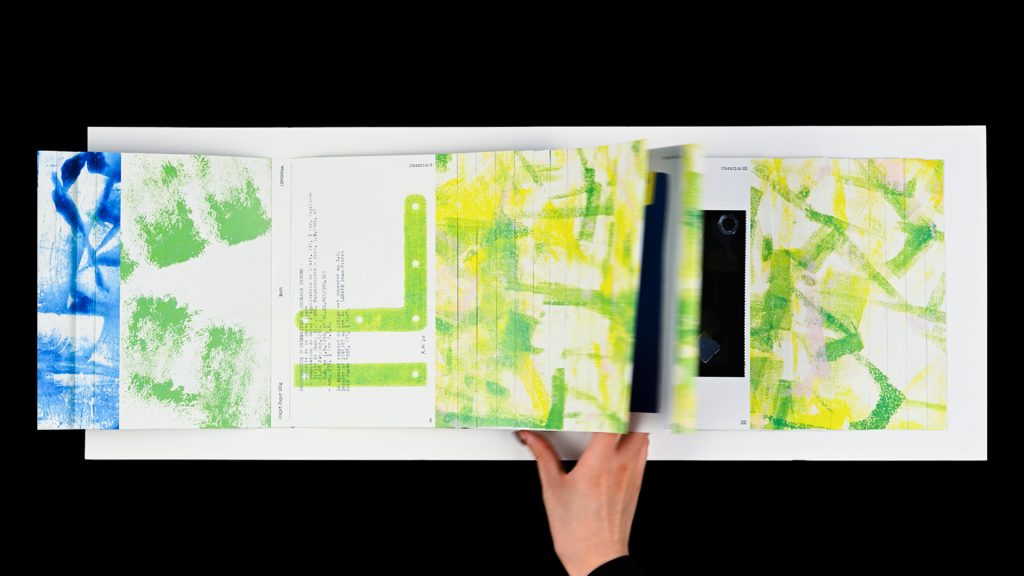
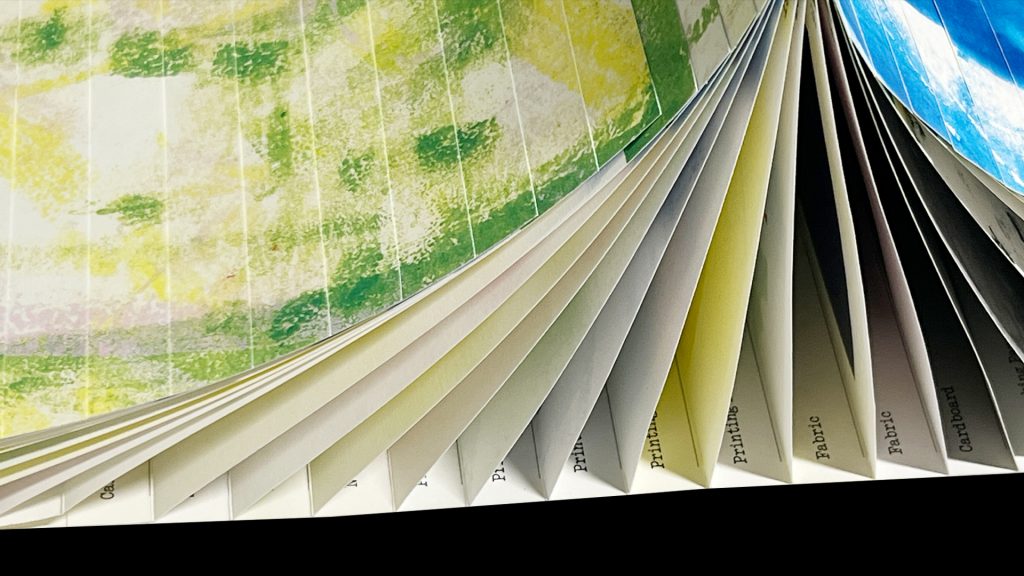
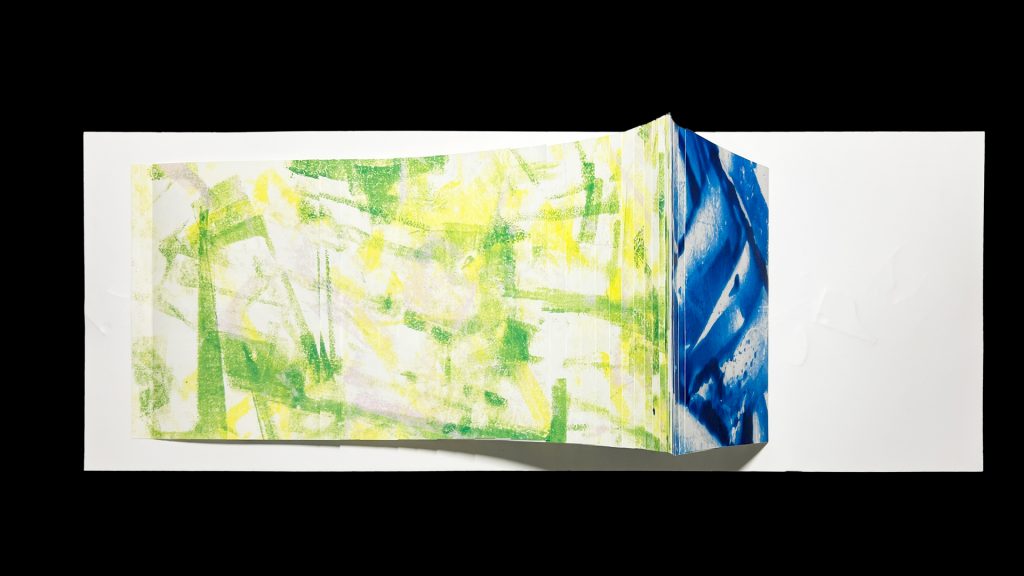
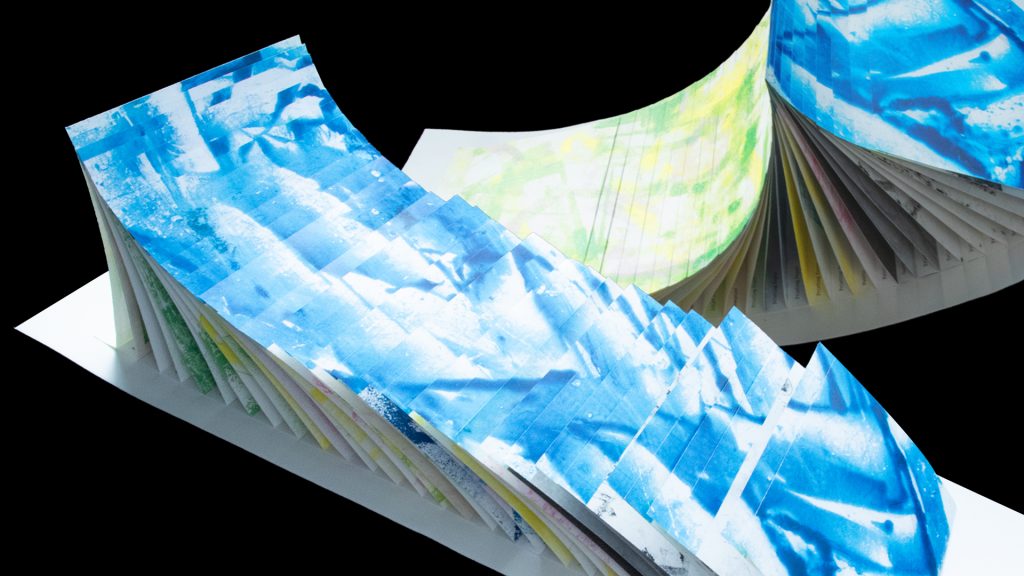
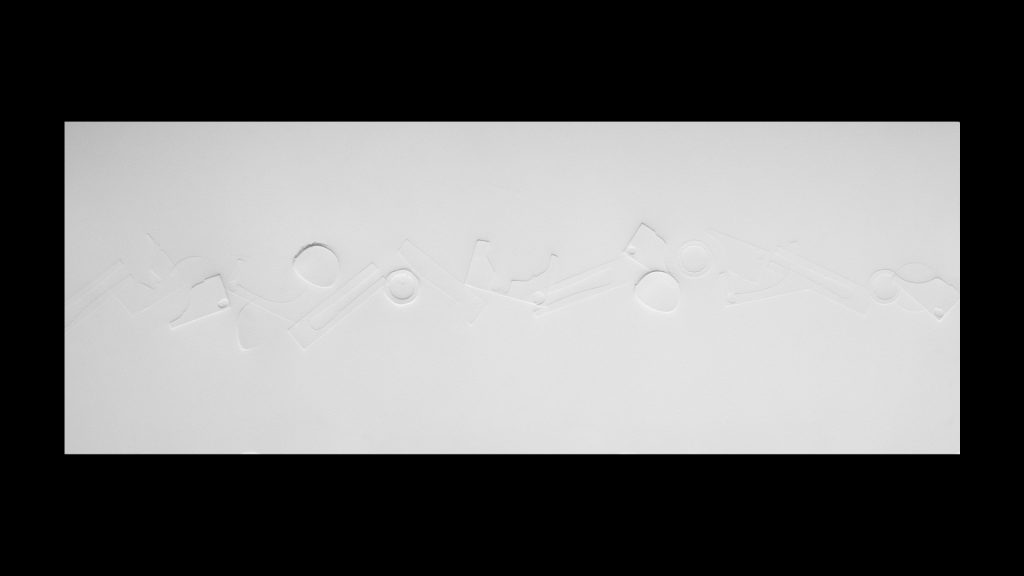
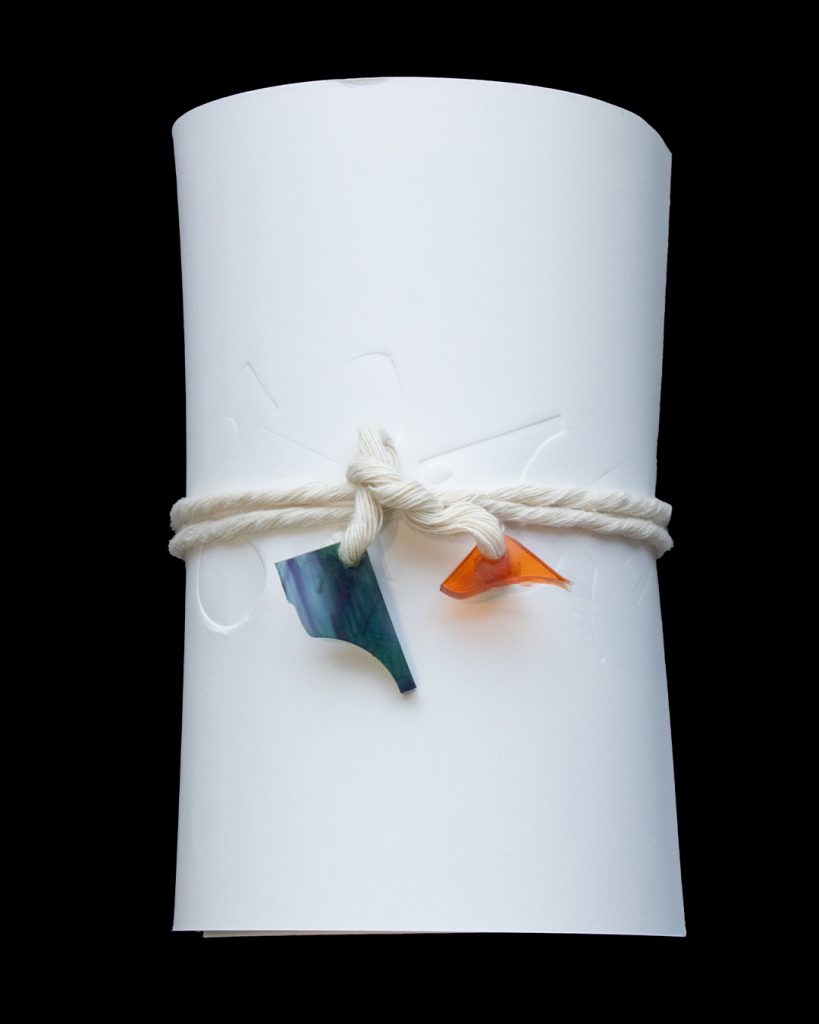
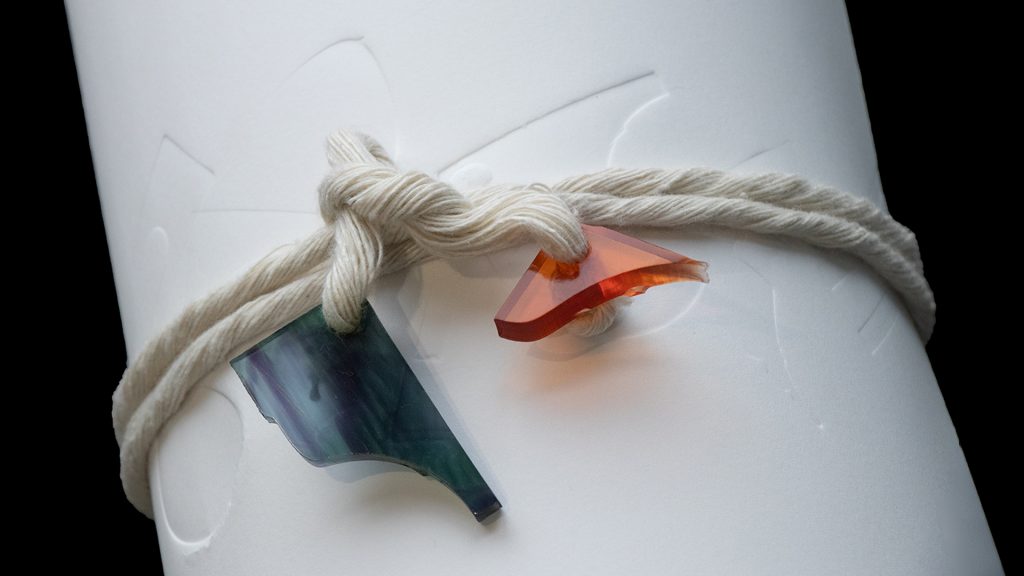
This publication uses dragon skin binding to gather relief printing traces by itertaing method. When the page margins align, these incidental traces form a composite imprint of the worktable. By archiving both intentional patterns and the autonomous mechanical traces generated during the process, to explore how control and chance co-produce visual outcomes and whether the authorship belongs to designers or the inherent agency of the mechanism and materials.

Welcome to myblog.arts. This is your first post. Edit or delete it, then start blogging!