Positions through iterating
Statement
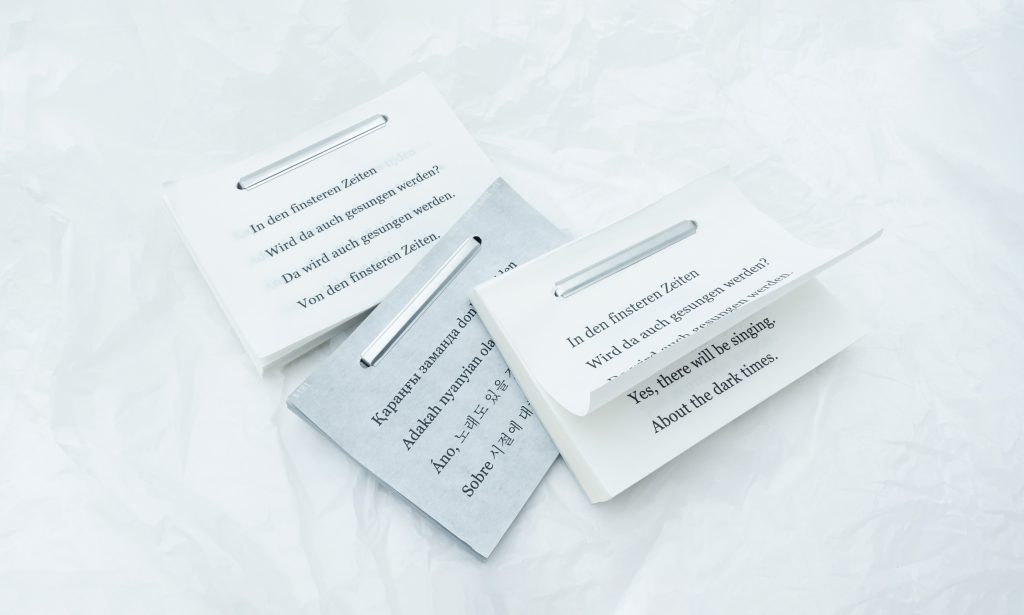
In this project, I explored how the translation difference between algorithmic automation and human cultural resonance is examined through a publication of Bertolt Brecht’s poem. I use an automated translation website to generate repeated iterations across multiple languages. As the process continues, the text gradually loses its original meaning and finally breaks down. It reveals how algorithms reshape language through speed, structure, and limitation.
In contrast, I invite individuals from different cultural backgrounds to translate the same poem and reflect on their interpretations. These responses show that translation is not only about language, but also about memory, emotion, and cultural context. Together, the two approaches create a dialogue between machine and human translation. Rather than treating meaning as fixed, the project presents translation as a process of negotiation, instability, and reinterpretation across systems and cultures.
Bibliography
1. Exercises in Style
Steyerl’s defence of the “poor image” provides a theoretical framework for the errors and glitches that appear in my webpage during the translation process. According to her argument, these digital “remains” are by-products of global circulation. In a similar way, the semantic shifts and distortions in translated texts can also be seen as a result of globalised communication. Just as the poor image is an inevitable outcome of the widespread and democratic distribution of images, the loss of meaning in text is also an unavoidable effect of translation. By presenting a text that is “broken” and “decayed,” I am defending the idea of a “poor translation” as a natural condition of our automated and highly connected world. It represents the remains of a Babel-like attempt to unify human thought through fast but imperfect algorithms.
2. In Defense of the Poor Image
3.Mouse or Rat? Translation as Negotiation
4. The Translator’s Task
5. The Library of Babel
6. New Dark Age
References
Figures